

A thoughtfully designed patio can give your garden a clear purpose and create an inviting place to sit, dine and enjoy time outdoors. At Quality Driveways, we install patios throughout Lytham St Annes, helping homeowners create attractive outdoor spaces that suit both the property and the way the garden is used.
We offer a wide choice of paving materials, colours and finishes, so your patio can be designed around your own taste rather than following a standard layout. From the natural variation of sandstone to the crisp appearance of porcelain, there are options to suit traditional gardens as well as more contemporary outdoor spaces.
Over 20 years of fast, reliable service
- Fast and Reliable Service
- Local references available
- 100% Client Satisfaction
- 300+ Happy Clients
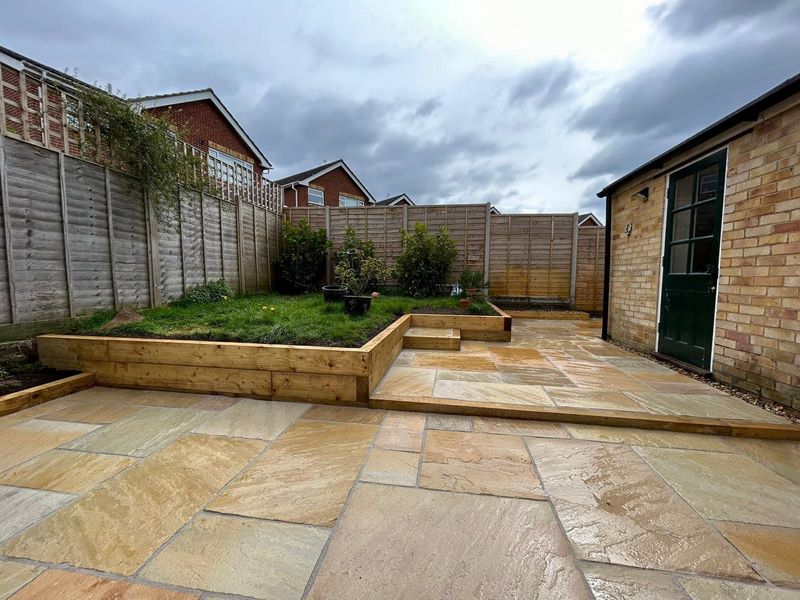
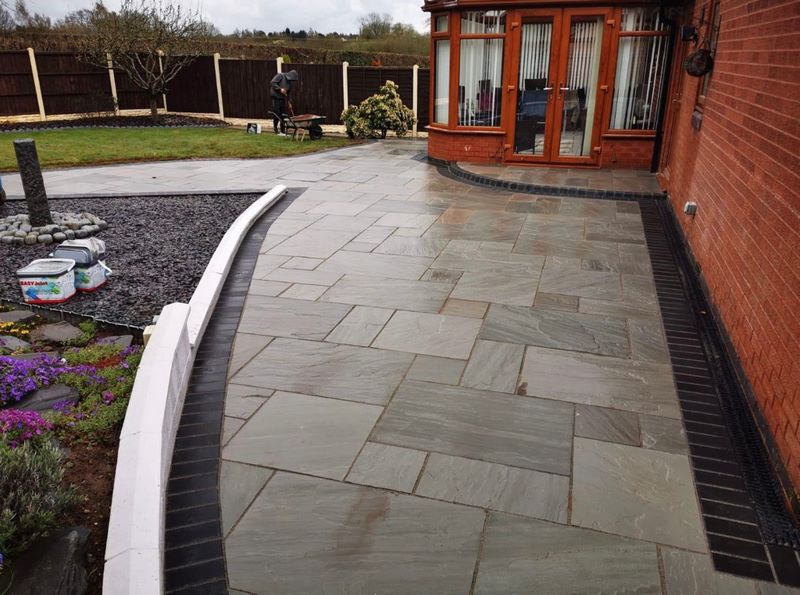
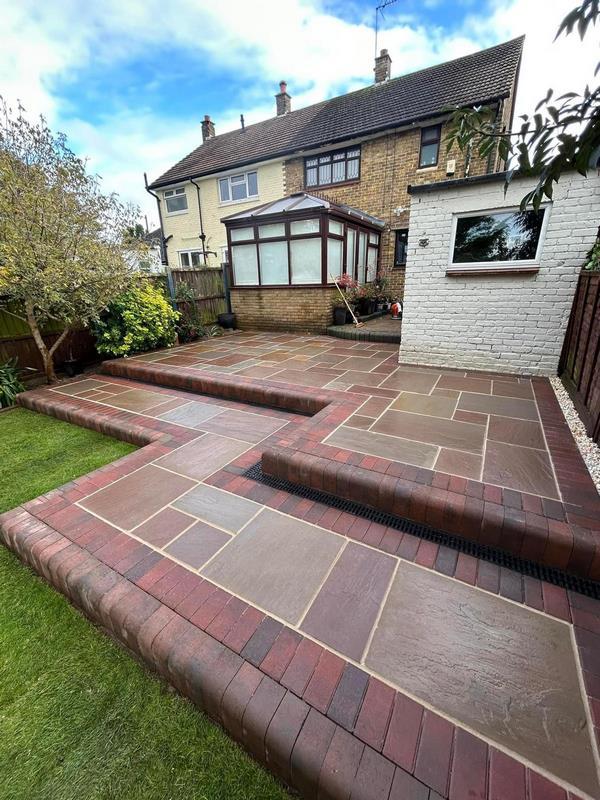
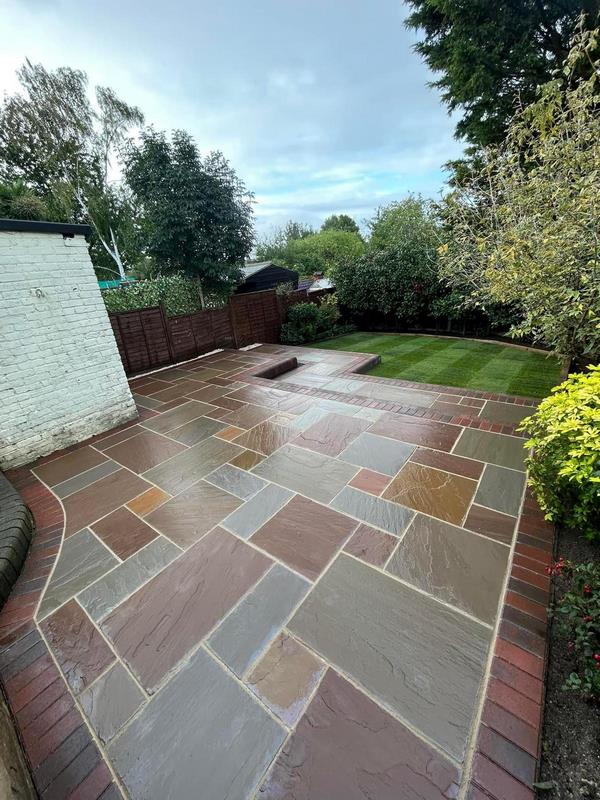
A patio can help bring different parts of a garden together, creating a defined area that feels connected to the house and the surrounding planting. Whether you want a small seating area, a larger space for entertaining or a patio that forms the centrepiece of the garden, the design can be shaped around the space available.
Our patio installers in Lytham St Annes can help you compare different paving styles, textures and layouts before deciding on the final look. We can also incorporate details such as contrasting borders, steps and pathways where they add to the overall design.
We work with materials including sandstone, porcelain, slate and other natural stone options, allowing you to create a finish that complements the character of your home. Natural stone can bring warmth and variation, while porcelain is a popular choice for homeowners looking for a cleaner, more refined appearance.
The aim is to create an outdoor area that feels considered, works naturally within the garden and gives you somewhere enjoyable to spend time throughout the year.
Working with us in Simple Steps
Step 1
Book a site survey and we'll visit to get an overview
We’ll visit your Lytham St Annes property to look at the garden, discuss how you want to use the space and talk through suitable paving materials, colours and layout ideas.
Step 2
We'll send you a quote
Once the design and paving choice have been discussed, we’ll provide a free, no-obligation quotation based on the size and style of patio you want.
Step 3
Then carry out the work
When you’re ready to go ahead, we’ll arrange a suitable date and install your new patio to the agreed design, creating a finished garden space for you to enjoy.
Request A Call Back
Need Some Inspiration?
If you’re still deciding between paving materials or styles, our previous patio projects can give you ideas for different colours, layouts and finishes.
Take a look through the gallery, or arrange a free survey and we can help you find a patio design that complements your Lytham St Annes home and garden.
What patio paving suits properties in Lytham St Annes?
The area has a mixture of period homes, traditional properties and modern developments, so it is worth choosing paving that complements the character of the house. Natural sandstone can work particularly well where you want variation and a more traditional appearance, while porcelain is a popular choice for cleaner, contemporary garden designs.
Granite and slate offer further options where you want something distinctive. Colour, paving size and laying pattern can all be adjusted to help the patio sit naturally alongside the property.
Is porcelain paving a good choice for Lytham St Annes gardens?
Yes. Porcelain is increasingly popular for patios because it offers a consistent appearance, comes in a wide range of finishes and is relatively straightforward to maintain.
It can work particularly well with modern extensions and properties with large patio or bifold doors. Outdoor-grade porcelain should be used, with appropriate preparation and installation underneath the paving.
Does being close to the coast affect patio installation?
Coastal conditions are worth considering in Lytham St Annes, particularly for more exposed gardens. Regular rainfall, wind and salt carried in the air can influence how outdoor materials weather over time.
Choosing suitable paving is important, but good groundwork, drainage and jointing are equally significant. A properly constructed patio should be designed with the local conditions and the individual garden in mind.
How much does patio installation cost in Lytham St Annes?
The cost varies according to the patio size, paving choice and amount of groundwork involved. A garden requiring extensive excavation or changes to existing levels will naturally involve more work than a straightforward installation on an easily accessible site.
Removing old paving, introducing drainage, constructing steps and adding decorative edging can also affect the quotation. We can provide a clearer price after surveying the garden.
Can you replace an old patio without redesigning the whole garden?
Yes. If the existing patio is in a good position but the paving has become dated, damaged or uneven, it can often be replaced while retaining the general layout.
Alternatively, replacing the patio can be an opportunity to make smaller changes such as increasing its size, altering the shape or improving the connection between the house and the rest of the garden.
Can a new patio work with bifold or sliding doors?
Yes. Patios are often designed alongside bifold, sliding or French doors to create a stronger connection between indoor and outdoor living areas.
Paving size, colour and layout can be selected to complement the interior and exterior of the property. Finished levels and drainage also need careful consideration around door openings to ensure the patio is constructed correctly.
Which patio paving is best for a traditional property?
Natural stone is often a good match for older or more traditional homes because of its variation in colour and texture. Sandstone in particular can create a softer, established appearance.
That does not mean porcelain cannot be used successfully. There are porcelain products designed to imitate natural stone, which can provide a traditional appearance while offering the characteristics of a manufactured paving material.
How can I make a patio feel like part of the garden?
A patio does not have to look like a separate rectangle of paving outside the back door. Its shape, borders and relationship with planting can all help integrate it into the garden.
Curved or offset layouts, planting beds, complementary paths and changes in paving direction can be used to soften the transition between hard landscaping and the rest of the outdoor space.
Can you create different levels or raised patio areas?
Yes. Changes in garden level can be incorporated into the design using steps, raised areas, retaining features or separate terraces.
This can be particularly effective in larger gardens, where different levels can help create individual areas for dining, seating or other uses rather than having one large uninterrupted paved space.
What can be done if my existing patio holds water?
Persistent puddles can indicate that the paving has insufficient fall, has moved over time or that the existing drainage is inadequate.
When replacing the patio, the levels can be reassessed and the area reconstructed so surface water is managed more effectively. Drainage channels or other measures may also be appropriate depending on the property.
Does natural stone need to be sealed?
Not necessarily. Whether sealing is worthwhile depends on the particular stone, the appearance you prefer and how the patio will be used.
Some homeowners choose to seal natural paving to make certain types of staining easier to manage or to alter its appearance. Others prefer to allow the stone to weather naturally. We can discuss the appropriate care for the paving you choose.
Can you incorporate matching paths and steps?
Yes. Paths, steps and edging can be designed at the same time as the main patio so the different areas feel connected.
They do not necessarily have to use exactly the same paving. Contrasting materials can sometimes be used effectively to define pathways, changes in level or different areas of the garden.
Can you create an outdoor entertaining area rather than just a patio?
Yes. If you regularly entertain outside, the patio can be planned around how you intend to use it, with enough space for dining furniture, seating, a barbecue and comfortable movement around the area.
Thinking about furniture positions before deciding the patio dimensions can result in a much more practical space than simply paving an arbitrary section of the garden.
Do you provide patio surveys and quotes in Lytham St Annes?
Yes. We can visit properties throughout Lytham St Annes to assess the garden, discuss your preferred paving and look at factors such as access, existing levels and drainage.
We can then provide a quotation based on the proposed design, paving materials and preparation required.